Common plumbing problems in older Decatur homes
Galvanized supply lines, clay sewer laterals, and 15-year water heaters cause most of the plumbing failures we see in Decatur's older housing stock.
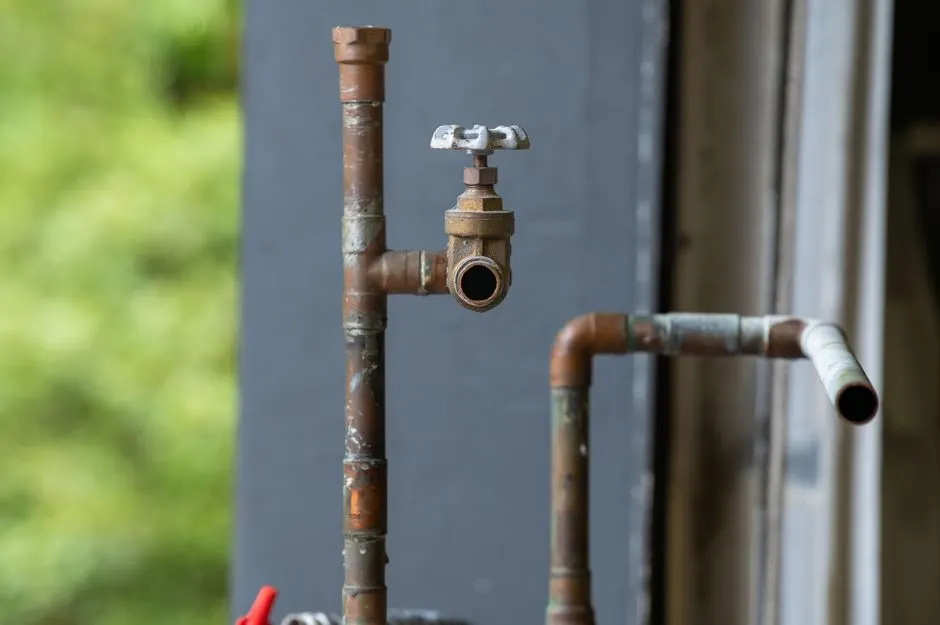
The most common plumbing problems in older Decatur homes are galvanized steel supply pipes that have rusted shut, clay sewer laterals that have cracked or been invaded by roots, and water heaters that are 12 to 18 years past their install date. Those three failures account for the majority of the calls we run in Decatur's pre-1970 housing stock, and each one has a predictable set of symptoms you can watch for before it becomes an emergency.
We're Plumber In Decatur GA, and we've worked on enough bungalows in Winnona Park, four-squares in Old Decatur, and post-war ranches in Midway Woods to know exactly what fails first, what it costs to fix in 2026, and when a repair is throwing money at a problem that needs replacement. This post walks through each failure, how to spot it, and what to do about it.
Why Decatur's older homes have predictable plumbing failures
Decatur's older housing stock was built in three distinct waves - 1910s to 1930s bungalows, 1940s to 1950s post-war ranches, and 1960s to early 1970s split-levels - and each wave used materials that are now at or past the end of their service life. Galvanized steel supply lines were standard until copper took over in the 1960s. Clay tile sewer laterals were standard until PVC took over in the 1970s. The result is that a house built in 1948 in Decatur Heights is running on pipes that were designed to last 40 to 50 years and are now 78 years old.
Decatur's soil makes it worse. The red clay under most of the city expands and contracts hard with our wet winters and dry summers, and that movement is what cracks clay sewer laterals and shears older cast iron. A pipe that would have lasted another decade in sandy soil fails here in five. If you've owned an older home in Decatur for more than a few years, you've probably already dealt with one of these failures - or you're about to.
Galvanized steel supply pipes: the most common problem in pre-1960 Decatur homes
Galvanized steel supply pipes rust from the inside out, and by the time you notice a problem, the inside diameter of the pipe is often reduced by 60 to 80 percent. That's why the shower in the hall bathroom trickles when someone runs the kitchen sink, and why the water comes out brown for the first 10 seconds every morning. The rust is not on the outside - it's the inside wall of the pipe flaking off into your water.
You can identify galvanized pipe by its dull gray color and the threaded fittings at every joint. Copper is reddish-brown and soldered. PEX is plastic, usually white, red, or blue. If your Decatur home was built before 1960 and has never been repiped, there's a strong chance you're on galvanized.
What to do about galvanized pipes
There is no repair for galvanized pipe that has rusted shut - you can replace a section, but the rest of the line is the same age and will fail next. The real fix is repiping Decatur GA homes with copper or PEX, which we do in two to four days for a typical 1,500-square-foot Decatur bungalow. Most homeowners see water pressure jump from 30-40 PSI to a healthy 55-70 PSI once the old steel is out.
If you're not ready to repipe the whole house, we can replace the worst runs first - usually the line feeding the kitchen and the main trunk from the meter - and stage the rest. That buys you time without leaving you with a pipe that's going to burst in January.
Clay and cast iron sewer lines under Decatur yards
Clay tile sewer laterals were standard in Decatur until the mid-1970s, and they fail in three ways: root intrusion at the joints, cracking from soil movement, and offset joints where the pipe sections have shifted out of alignment. Cast iron, used from the 1920s through the 1970s, fails differently - it rusts through from the inside and eventually collapses into a channel that catches everything you send down the drain.
The symptoms are the same either way. You get slow drains in multiple fixtures at once, gurgling from the toilet when the washing machine drains, sewage smells in the yard, or a backup in the lowest drain in the house. If you're seeing any of those, the problem is almost certainly in the lateral, not the fixture.
How we diagnose sewer problems in Decatur
We run a video camera inspection Decatur GA homeowners can watch in real time. The camera shows us exactly where the break is, how far it runs, and whether the pipe is clay, cast iron, or something else. From there we can tell you whether the line is a candidate for spot repair, sewer line repair Decatur GA with a trenchless liner, or full sewer line replacement Decatur GA.
Trenchless repair runs $4,000 to $12,000 in 2026 depending on length and depth. Full replacement with excavation runs $8,000 to $20,000. The camera inspection is what keeps you from paying for the wrong one.
Water heaters that have outlived their service life
A tank water heater lasts 8 to 12 years in Decatur's water. Anything past 12 years is on borrowed time, and we see plenty of 15- and 18-year-old units in older Decatur homes because the previous owner installed it and never thought about it again. The signs it's done: rusty water from the hot side only, popping or rumbling sounds when it heats, moisture around the base, and hot water that runs out faster than it used to.
Repair is worth it if the tank is under 10 years old and the problem is a heating element, thermostat, or pressure relief valve - usually $150 to $450. Past 12 years, the money is better spent on replacement. A standard 50-gallon tank install runs $1,200 to $2,200 in 2026. A tankless water heater services Decatur GA install runs $3,000 to $5,500 but lasts 20 years and never runs out of hot water.
One thing specific to older Decatur homes: if your water heater is in a closet or attic, the drain pan and overflow line are often missing or undersized. That's a code issue and a flood risk. We fix it during the install.
Low water pressure and rusty water: symptoms of a bigger problem
Low pressure and rusty water are symptoms, not problems. In an older Decatur home they almost always point to one of three things: galvanized supply pipes that have rusted shut, a failing pressure-reducing valve at the meter, or a hidden leak pulling water away from the fixtures. The third one is the one that costs you money every month.
A hidden leak under a slab or behind a wall can run for months before you notice. The signs: a water bill that jumped 20 percent or more with no change in usage, a water meter that spins when nothing is running, warm spots on the floor, or the sound of running water when everything is off. We use acoustic listening equipment and thermal imaging to find leak detection and repair Decatur GA issues without tearing into walls.
If the pressure is low at every fixture, it's a supply problem. If it's low at one fixture, it's a clogged aerator or a failing cartridge - a $20 fix. Knowing the difference saves you a service call.
What plumbing issues are common in Decatur GA historic homes?
Decatur homes built before 1950 - the bungalows and four-squares in Old Decatur, Winnona Park, and the streets around the square - share a specific set of problems that newer construction doesn't have. Original cast iron drain stacks that have rusted through at the horizontal runs. Lead supply lines that were never replaced (rare, but we still find them). Drum traps under tubs and sinks that clog constantly and are no longer code-compliant. And vent stacks that were sized for one bathroom and now serve three.
We see this most in Plumber in Old Decatur homes, where the housing stock is the oldest in the city and the renovations have often been partial. A kitchen remodel in 2005 might have brought new PEX to the kitchen while the rest of the house stayed on galvanized. That mix creates pressure imbalances and makes diagnosis harder - you have to trace each line to know what you're dealing with.
If you own a historic Decatur home, a residential plumbing services Decatur GA inspection every two to three years is worth the $150 to $300. We check the supply lines, drain stacks, water heater, and shut-off valves, and we tell you what's fine, what to watch, and what needs to go.
Common mistakes homeowners make with old Decatur plumbing
The most expensive mistakes we see are the ones that come from treating old plumbing like new plumbing. Here's what to avoid:
- Snaking a clay sewer line repeatedly instead of camera-inspecting it. A snake clears the blockage but doesn't tell you the pipe is cracked. You'll be calling again in three months.
- Using chemical drain cleaners on old pipes. The lye generates heat that cracks clay and accelerates corrosion in cast iron. It's the fastest way to turn a $200 clog into a $6,000 sewer repair.
- Replacing one section of galvanized pipe and leaving the rest. The new section is fine; the old pipe next to it is still rusted shut. You've spent money and the pressure is still bad.
- Ignoring a small leak under a sink. In an older Decatur home, that drip is often the first sign the shut-off valve is about to fail completely. A $15 valve now beats a $2,000 cabinet and floor repair later.
- Running a water heater past 15 years because it's still working. A tank that age can fail without warning and dump 40 gallons into your house. The $1,500 you save by waiting is not worth the $10,000 flood claim.
One more: don't assume a home inspection caught everything. Standard inspections don't camera the sewer lateral or pressure-test the supply lines. The two most expensive systems in the house are the two they look at least.
When to call a professional
Call us when you see water where it shouldn't be, when more than one drain is slow at the same time, when your water bill jumps without explanation, or when your water heater is past 12 years old and showing any of the symptoms above. Those are the calls where waiting turns a repair into a replacement.
Plumber In Decatur GA handles the full range of old-home plumbing work - repiping, sewer line repair and replacement, water heater install, leak detection, and the everyday repairs that come with owning a house built before 1970. We quote the job before we start, and we don't leave until the water runs clear and the drain runs fast.
If you're not sure whether your problem is urgent, call us and describe it. We'll tell you straight.
Frequently Asked Questions
What are common plumbing problems in older Decatur homes?
Galvanized steel supply pipes that have rusted shut, clay or cast iron sewer laterals that have cracked or been root-invaded, and water heaters past 12 years old. Low water pressure, rusty water, and slow drains across multiple fixtures are the usual symptoms. Most Decatur homes built before 1960 have at least one of these.
Should I repipe my older Decatur home?
If your home has galvanized steel supply lines and you're seeing low pressure, rusty water, or repeated leaks, yes. Repiping a typical Decatur bungalow runs $4,500 to $9,000 in 2026 and takes two to four days. Partial repiping is an option if the whole-house cost isn't in the budget right now.
How do I know if my old pipes need replacing in Decatur GA?
Three signs: water pressure under 40 PSI at the fixtures, brown or rusty water on first draw in the morning, and more than one leak in the same line within a year. Any of those means the pipe is failing from the inside. A pressure test and visual inspection confirm it.
What plumbing issues are common in Decatur GA historic homes?
Pre-1950 Decatur homes often have original cast iron drain stacks rusted at the horizontal runs, drum traps under tubs that clog constantly, undersized vent stacks, and lead supply lines that were never replaced. Partial renovations make it worse by mixing old and new materials on the same system.
How much does old home plumbing repair cost in Decatur GA?
Small repairs run $150 to $450. Sewer line repair runs $4,000 to $12,000 trenchless, or $8,000 to $20,000 with excavation. Whole-home repiping runs $4,500 to $9,000. Water heater replacement runs $1,200 to $2,200 for a standard tank. Those are 2026 prices for Decatur.
Get help with Plumber in Decatur
If your older Decatur home is showing any of the symptoms above - rusty water, low pressure, slow drains, or a water heater past its prime - call us at +1 (888) 721-1338. We'll diagnose it, quote it, and fix it right the first time.