How to detect a hidden water leak in your Decatur home
A hidden water leak in Decatur often shows up as a spiking water bill, a warm floor, or a musty smell. Here is how to find it before it damages your home.
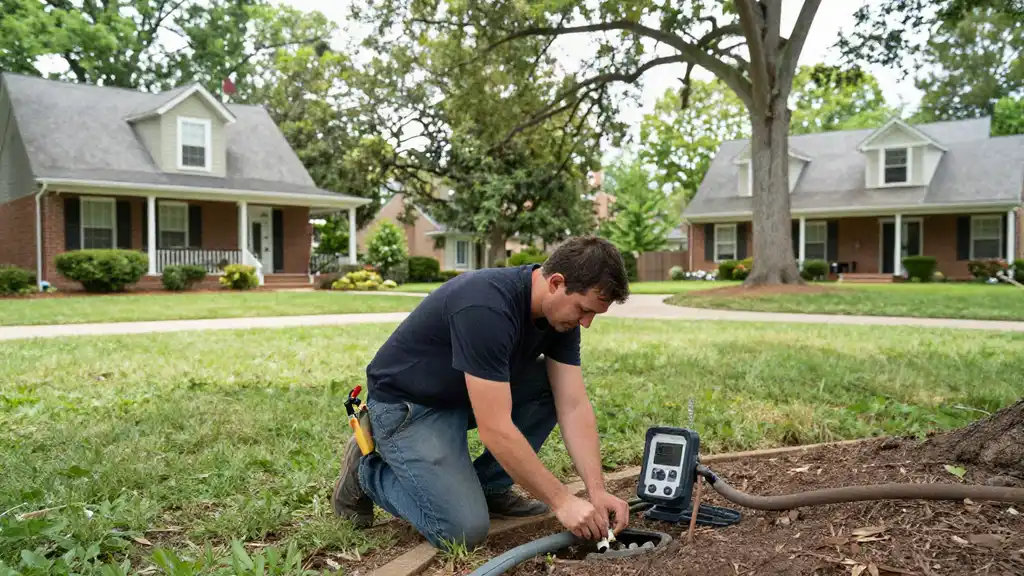
You can detect a hidden water leak in your Decatur home by shutting off every fixture and watching your water meter for movement, then checking for warm floor spots, musty odors, bubbling paint, and unexplained jumps in your water bill. If the meter's low-flow dial still spins after you close the main valve, water is escaping somewhere between the meter and your fixtures - and that is the moment to stop guessing and start locating.
We run these calls every week across Decatur, from 1920s bungalows near the square to newer builds off Medlock Road. The rest of this post walks through the exact checks we use, what each symptom points to, what detection costs in 2026, and when it is time to hand it off to a licensed plumber.
Start with your water meter
The meter test is the fastest way to confirm a hidden water leak in Decatur before you tear into drywall. Find the meter box near the curb - usually under a concrete or composite lid stamped with the city or DeKalb County Water Authority logo - and lift it carefully.
Now do this:
- Turn off every faucet, the dishwasher, the washing machine, and both toilet supply valves.
- Make sure no irrigation zone is running and the water heater is not mid-cycle.
- Watch the meter's low-flow indicator - the small triangle or red dial - for two full minutes.
- If it moves at all, you have a leak. If it spins fast, you have a big one.
A slow crawl usually means a toilet flapper, a pinhole in a copper line, or a leaking irrigation valve. A steady spin points to a supply-line break or a slab leak. Write down the reading, wait an hour without using water, and read it again. A jump of even 10 gallons in an hour with nothing running is a leak worth chasing today.
Signs of a hidden water leak in Decatur homes
Signs of a hidden water leak in Decatur homes show up in four places: your water bill, your floors, your walls, and your nose. Most homeowners notice the bill first - a jump of $40 to $120 in a single month with no change in habits is the classic opening clue.
Then the physical evidence starts stacking up:
- Warm spots on the floor. A hot-water slab leak heats the concrete from underneath. If one tile feels warm underfoot while the rest are cool, that is a supply line leaking beneath the slab.
- Musty smell in a closet or hallway. Hidden moisture feeds mold within 24 to 48 hours. If a closet that never gets wet smells like a basement, water is pooling behind the wall.
- Paint bubbling or peeling. Water pushing through drywall from behind lifts the paint film. Look at baseboards, door frames, and ceiling corners.
- Sound of running water when everything is off. Put your ear to the floor near the water heater or the main shutoff. A faint hiss is pressurized water escaping a pinhole.
- Higher water bill two months running. One odd month is a fluke. Two is a leak.
If your bill spike comes with a slow drain or gurgling toilet, the problem may not be a supply leak at all - it could be a cracked drain line pulling in groundwater. That is a different job, and our team handles sewer line repair Decatur GA for exactly that situation.
How do I detect a hidden water leak in my Decatur home?
You detect a hidden water leak in your Decatur home by combining the meter test with a room-by-room inspection, then using professional tools - acoustic listening, thermal imaging, and pressure isolation - to pinpoint the exact spot. The DIY part narrows the search. The pro part finds the leak without opening five walls.
Here is how we do it on a typical call:
- Isolate the system. We close the main shutoff and pressurize sections one at a time to see which zone loses pressure.
- Listen. A ground microphone picks up the frequency of water escaping a pipe under slab or behind a wall. Copper and PEX sing at different pitches.
- Scan with thermal imaging. An infrared camera shows temperature differences - a hot-water leak glows, a cold-water leak reads cool against the surrounding material.
- Confirm with a camera or pressure gauge. For drain-side leaks, we run a video camera inspection Decatur GA to see the break from inside the pipe.
- Mark the spot. We chalk the floor or wall so the repair crew opens a 12-inch square instead of a 6-foot trench.
Most residential detection calls take 45 to 90 minutes. Slab leaks and buried yard lines take longer because we are working through concrete or landscaping.
Slab leaks and Decatur's older housing stock
Slab leak detection in Decatur GA is more common than people expect because so much of the city was built between 1920 and 1965, when copper supply lines were run directly through the slab without the protective sleeving we use today. Fifty to eighty years of Decatur's clay-heavy soil shifting under a foundation will eventually stress those lines.
The neighborhoods where we see slab leaks most often are the older ones - Plumber in Winnona Park calls, for example, frequently come from 1940s and 1950s homes with original copper under the living room floor. Same story in Old Decatur and along the streets just south of the square.
What makes a slab leak different from a wall leak:
- The water is under concrete, so you cannot see it - you feel it as warmth or hear it as a hiss.
- It can undermine the slab itself if it runs long enough, causing cracks in tile and sticking doors.
- Repair usually means either rerouting the line overhead or tunneling under the slab, not just cutting drywall.
If you are seeing cracked tile, a warm floor, and a climbing water bill all at once, that combination is a slab leak until proven otherwise. We confirm it with acoustic and thermal gear before anyone picks up a jackhammer.
What water leak detection costs in Decatur in 2026
Typical 2026 pricing for water leak detection in Decatur runs $250 to $600 for a standard residential call, with slab leak detection at the higher end because of the equipment and time involved. The detection fee is separate from the repair, and we credit it toward the repair when you hire us to fix what we find.
Here is the rough breakdown we see:
- Basic leak detection (visible-access areas): $250-$350.
- Slab leak detection with acoustic and thermal: $400-$600.
- Buried yard line location: $350-$550.
- Repair after detection: $300-$900 for a simple line repair, $1,500-$4,500 for a slab leak reroute or tunnel.
Compare that to the cost of ignoring it. A hidden leak that runs for three months can add $300 to $700 to your water bill, rot a section of subfloor, and grow mold that costs $1,500 to $4,000 to remediate. Detection is the cheap part.
If the leak turns out to be a failing pipe rather than a single pinhole, we will tell you straight whether a spot fix or a larger pipe replacement Decatur GA makes more sense for the age of your home.
Common mistakes when chasing a hidden leak
The biggest mistake is assuming a high water bill means a toilet flapper and stopping there. Toilets do leak - a worn flapper can waste 200 gallons a day - but if you replace it and the bill stays high, you have not found the real leak.
Other mistakes we see regularly:
- Opening the wall before locating the leak. Cutting drywall at random turns a $400 detection into a $2,000 drywall and paint job. Locate first, cut second.
- Ignoring a warm floor because "it's just the sun." Sun warms a whole room. A hot-water slab leak warms a 2-foot patch.
- Running the water heater harder to compensate. If a hot line is leaking, you are paying to heat water that is going into the ground.
- Waiting for visible water. By the time water reaches a ceiling, the leak has usually been running for weeks.
- Assuming homeowner's insurance covers detection. Most policies cover the resulting damage, not the detection or the pipe repair itself. Read your policy before you assume.
One more: don't shut off the main and call it fixed. Shutting off the water stops the damage but leaves you without water. The leak is still there.
When to call a professional
Call a professional when the meter test confirms a leak but you cannot find it in 30 minutes, when you suspect a slab leak, or when the leak is on the main line between the meter and the house. Those three situations need acoustic and thermal equipment that no homeowner keeps in the garage.
We handle hidden water leak detection Decatur GA homeowners call us for every week - locating the leak, repairing the line, and pressure-testing before we leave so you know it is fixed. If the leak is on the hot-water side and your heater is 12 years or older, we will also check whether a water heater repair Decatur GA or a full replacement makes more sense than chasing pinholes one at a time.
You do not need to know which pipe failed before you call. You need to know your water bill went up and something is wrong. That is enough.
Frequently Asked Questions
How do I detect a hidden water leak in my Decatur home?
Shut off all fixtures and watch your water meter's low-flow dial for two minutes. If it moves, you have a leak. Then check for warm floor spots, musty odors, and bubbling paint. If you cannot pinpoint it in 30 minutes, call a plumber with acoustic and thermal detection gear.
What are signs of a hidden water leak in Decatur GA?
The top signs are a water bill jump of $40 or more in one month, warm spots on the floor, a musty smell in closets or hallways, paint bubbling at baseboards, and the sound of running water when everything is off. Two or more together means a leak.
How much does water leak detection cost in Decatur Georgia?
Expect $250 to $600 for residential detection in 2026. Slab leak detection runs $400 to $600 because it needs acoustic and thermal equipment. The detection fee is usually credited toward the repair when you hire the same plumber to fix it.
Can a hidden leak cause mold in Decatur homes?
Yes. Mold can start growing within 24 to 48 hours of a leak in Decatur's humid climate. Hidden leaks behind walls or under slabs are the worst offenders because air circulation is low. Remediation typically costs $1,500 to $4,000, which is why early detection matters.
Will my homeowner's insurance pay for leak detection in Decatur?
Most policies cover the water damage a leak causes, not the detection or the pipe repair itself. Some will reimburse detection if it leads to a covered claim. Call your insurer before you authorize work so you know what is covered.
Get help with Plumber in Decatur
If your meter is spinning and you cannot find where the water is going, we will find it. Plumber In Decatur GA locates hidden leaks across Decatur with acoustic and thermal detection, repairs the line, and pressure-tests before we leave.
Call +1 (888) 721-1338 and we will get a technician out to your home.